Robotics solutions architect for startups and businesses
Rakshith Bangalore works with startups and businesses that are starting a robotics programme. Rakshith was involved in starting a robotics programme at Nottingham Trent University, and works hands-on with real robots, across hardware and software.
Who it is for
Robotics programmes fail more often at the edges than at the core. The robot works in a demo, then the pilot stalls: the use case was too broad, the integration was underestimated, or nobody owned the path from pilot to production. Rakshith works with teams that want to avoid this.
- Startups building a robot product, or adding robotics to an existing product, that need architecture, a first prototype or a technical lead.
- Businesses and manufacturers that want to start a robotics or automation programme and need a clear first use case, a feasibility study and a pilot plan.
- Universities and research groups that want to set up a robotics laboratory or programme with industry partners.
Services
Six ways to engageHands-on support for a new programme
For a team that is starting a robotics programme: help to decide what to prioritise and what to build first, then hands-on work on the robots and on the demos that help to win clients.
Solution architecture and feasibility
Requirements, system architecture, make-or-buy decisions, safety concept and a feasibility study before money is spent on hardware.
Pilot to deployment
One scoped pilot with a measurable end state, instrumented from day one, and a plan to move from pilot to production.
Simulation and sim-to-real
Digital twins and simulation in Isaac Sim and MuJoCo, reinforcement learning, and the transfer of controllers to real robots.
Hardware to market
Mechanical design and integration, BOM and DFM, supplier timelines with manufacturers, and the first production run.
Fractional robotics lead
Part-time technical leadership for a robotics team: architecture reviews, hiring support, delivery and investor-facing technical detail.
How a robotics programme starts
Five phasesChoose the first use case
- Map the workflow on site and list the candidate tasks.
- Select one task with a measurable end state and a realistic chance of success. The hardest task is rarely the right first task.
Design the system
- Define the requirements, acceptance criteria and safety concept.
- Choose the platform, the sensors and the software stack. Decide what to buy and what to build.
Prove it in simulation first
- Build a digital twin of the cell or the site. Test layouts, controllers and navigation before the hardware arrives.
- Identify the real actuators and sensors, so the simulation matches the hardware.
Run one instrumented pilot
- Run the pilot next to normal operations. Record logs, video and operator feedback from the first week.
- Measure the result against the acceptance criteria from phase 02.
Move from pilot to production
- Plan support, spare parts, training and the next use cases.
- Build the internal team, so the programme does not depend on one person.
“Identify the system before you trust it.”
Why a hardware and software generalist
Most robotics problems sit between disciplines. A controller can work in simulation and fail on a real actuator. A good mechanical design can be impossible to manufacture at the target cost. A specialist sees one side of the problem; a generalist sees the system.
Rakshith works across mechanical design, integration, control, simulation, machine learning and product delivery. Most of this was learnt hands-on, on real hardware: running demos, teleoperating the robots, building reinforcement learning pipelines, and reading and testing different methods to make humanoid robots work in industrial settings.
Proof of work
Full project index →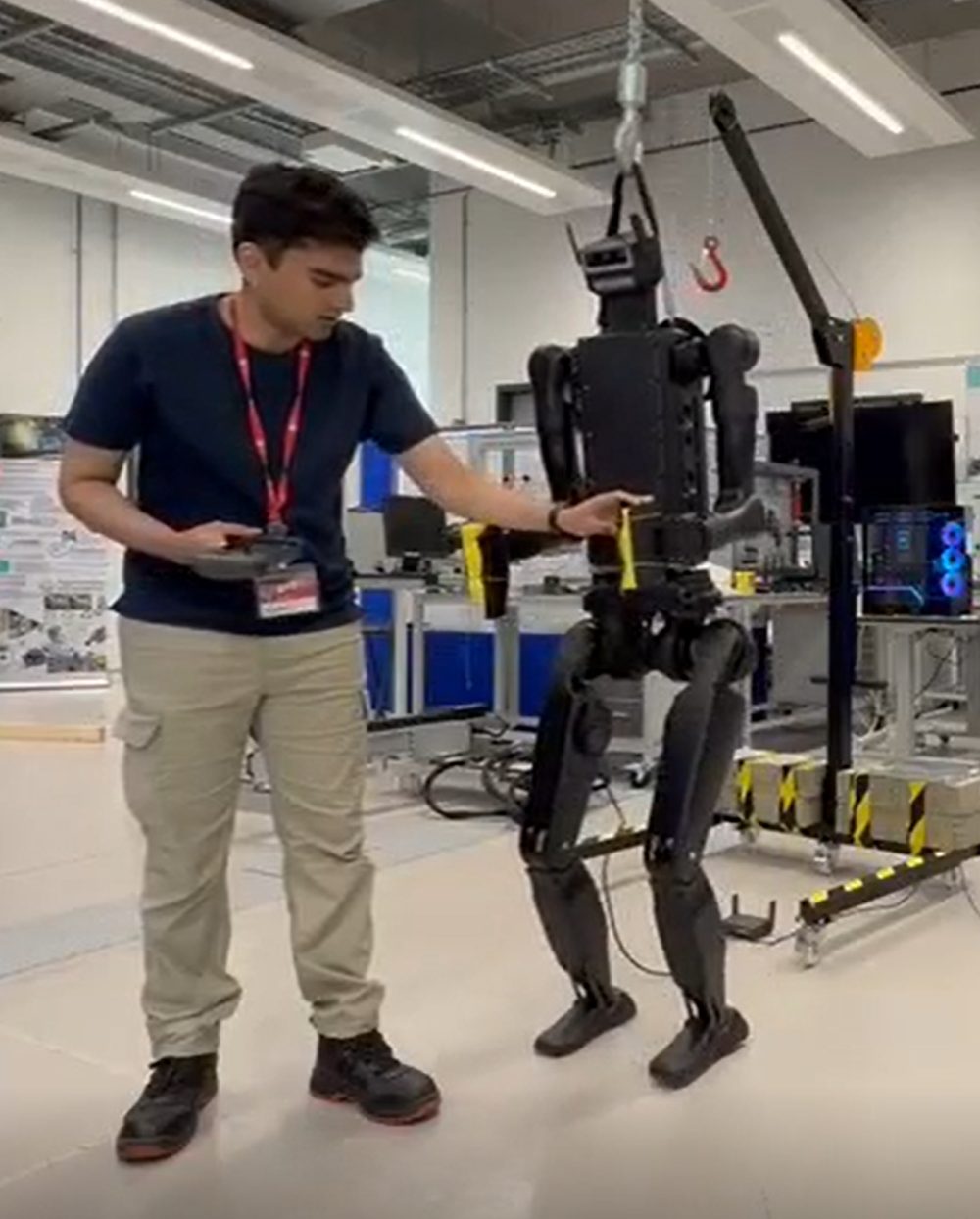 Industrial use cases, sim-to-real transfer and actuator identification on Unitree H1-2 and G1.
SimulationWardZero
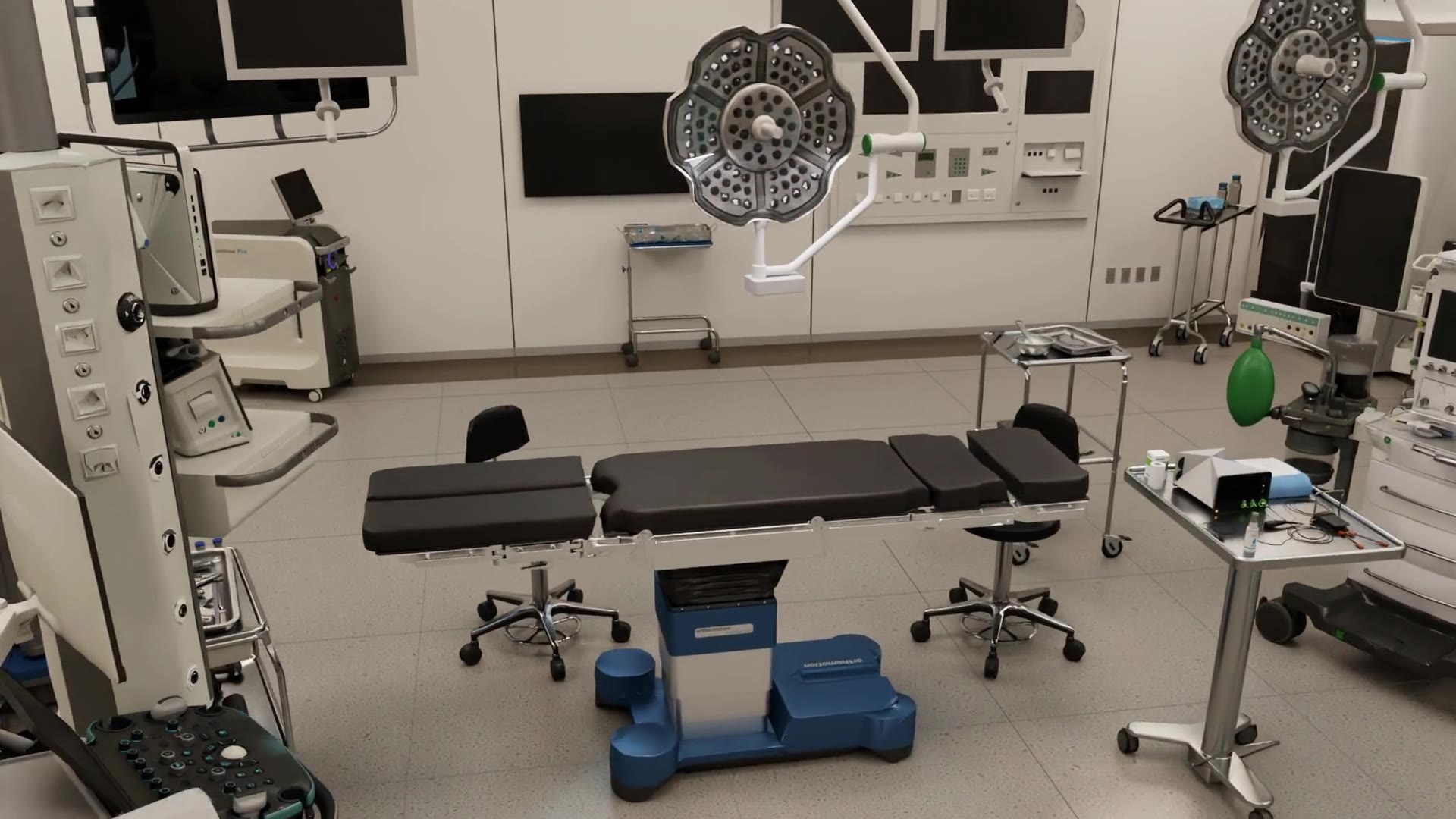 An open simulated hospital with Isaac Sim, MuJoCo, a safety layer and ROS 2 navigation.
ManufacturingIndustry 4.0 mobile manipulatorUR-10Scoped with Walkers around a live factory workflow. Won the MEng capstone award.
HardwareHardware product to marketBOM · DFMA hardware product from working prototype to first production run, with manufacturers in China.
Questions
Frequently askedWhat does a robotics solutions architect do?
A robotics solutions architect turns a business problem into a working robot system. The work covers the use case, the requirements, the system architecture, the choice of robot and software, the safety concept, the pilot and the plan for deployment. Rakshith Bangalore does this work for startups and businesses, with hands-on experience in both robot hardware and robot software.
How does a startup or a business start a robotics programme?
Start with one task that has a measurable end state, not the hardest task. Design the system and the acceptance criteria, prove the concept in simulation, then run one instrumented pilot next to normal operations. Plan the move from pilot to production before the pilot starts, so the programme does not stall. Rakshith was involved in starting a robotics programme at Nottingham Trent University and brings the same priorities to companies: what to build first, and which demos help to win clients.
What is a high-velocity robotics generalist?
A robotics generalist works across mechanical design, electronics integration, control, simulation, machine learning and product delivery, instead of one discipline. High velocity means taking an idea through architecture, prototype and pilot quickly, and knowing when a specialist is needed. Rakshith works across these areas and learnt most of them hands-on with real hardware, from humanoid robot controllers to bills of materials.
Why does a robotics programme need both hardware and software experience?
Most robotics failures happen between disciplines. A controller that works in simulation can fail on a real actuator, and a design that works as a prototype can be too expensive to manufacture. A lead who understands both sides finds these problems early, when they are cheap to fix.
Which robots and tools does Rakshith work with?
Unitree H1-2 and G1 humanoid robots, Universal Robots UR-10 arms, Omron LD250 mobile bases and SmartShift tool changers. Software includes ROS 2, Nav2, Isaac Sim, MuJoCo and MuJoCo MJX, reinforcement learning with PPO, ONNX, MATLAB and CUDA. Design and delivery tools include Fusion 360, Ansys, JIRA, Confluence and Miro.
Where does Rakshith Bangalore work?
Rakshith Bangalore is based in the United Kingdom and Singapore and works with startups and businesses remotely worldwide.
How can a team work with Rakshith?
Book a call through the Let's Connect link on bkrakshith.com, or send an email from the contact page. Engagements include robotics programme set-up, solution architecture and feasibility studies, pilot to deployment, simulation and sim-to-real, hardware to market, and fractional robotics leadership.
Start the robotics programme with a call
Describe the product or the workflow, the constraints and the timeline. Rakshith will say whether robotics is the right answer, and what the first step should be.